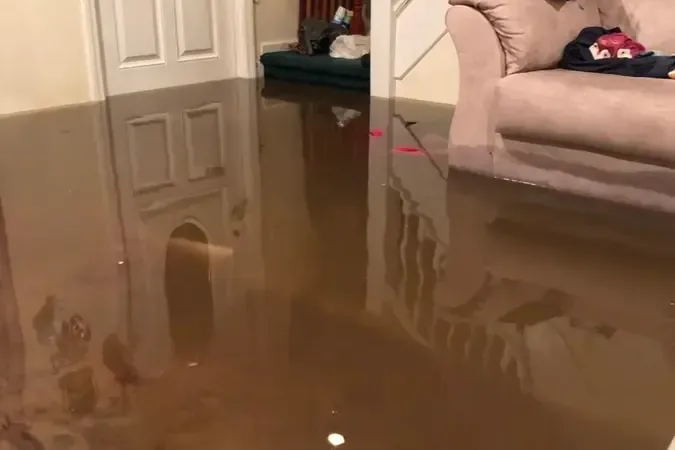
Palmyra sits on the Delaware River and Pennsauken Creek, and the borough keeps a short list of intersections that are more prone to flooding. Street water and indoor water are different problems, though, and the second one calls for a different kind of response.
Key takeaways
- The borough Office of Emergency Management lists four flood prone intersections: Temple Boulevard and Garfield Avenue, Fifth Street and Route 73, Leconey Circle at Firth Lane, and Spring Garden Street and Route 73.
- The borough ties those intersections to the design of its aging storm drain system and to high tides.
- A borough news post says flooding can happen anywhere, so a property away from those corners can still take on water.
- On July 12, 2021, most borough roads flooded for a few hours during flash flooding that led to 12 water rescues across Burlington County.
- Flood water that enters a building is treated as contaminated, so removal comes before drying.
The four intersections the borough lists
The borough Office of Emergency Management names the most flood prone intersections in town. Each one is a place the borough considers more prone to flooding.
The list is about roads, not houses. It does not say that homes beside those corners flood, only that the corners are more prone to it.
Route 73 runs through the borough and interchanges with County Route 543, most of which is called Broad Street. Two of the four corners sit on Route 73.
- Temple Boulevard and Garfield Avenue.
- Fifth Street and Route 73.
- Leconey Circle at Firth Lane.
- Spring Garden Street and Route 73.
Why those corners fill: aging drains, high tides and two waterways
The borough says the design of its aging storm drain system and high tides make those intersections more prone to flooding. Two bodies of water sit close by as well.
Storm drains and catch basins
The borough cleans its catch basins regularly and bans debris that blocks drainage ways. It also asks residents to report any catch basin that does not drain.
Debris against an inlet is the kind of blockage the borough works to prevent.
The Delaware River and Pennsauken Creek
A 2017 FEMA flood study for Burlington County states that the Delaware River causes flooding in the borough. NOAA also lists a tide prediction station at the Route 73 bridge over Pennsauken Creek.
Tides matter because the borough names high tides as one reason those corners flood.
July 12, 2021: a few hours of street water
Flash flooding on July 12, 2021 led to 12 water rescues across Burlington County. The Palmyra Fire Department said most borough roads flooded from about 6 p.m., and the water had receded by 9:40 p.m.
A few hours is short for a storm and long for anyone whose door sits low.
A storm and flood cleanup call after a night like that is about the water that crossed a threshold, not the water in the street.
A short flash flood can leave a long cleanup. Water that covered a street for a few hours can also reach a garage, a low door or a yard drain and spread from there.
- Garages and low doors are often the first places water enters.
- Yards and driveways can hold water after the street itself has drained.
- Water that stands against a wall for a few hours can soak into the lower part of the wall.
Street water versus indoor water
Water on a road is moving, and it carries whatever washed down gutters and yards. Once it enters a building, it settles, soaks and stays.
Flood water also arrives with whatever it picked up on the way: soil, oil, debris and sometimes sewage. That is why a restoration team classifies it before deciding what stays and what goes.
- Street flooding is a traffic and safety problem. Indoor flooding is a materials problem.
- Flood water is treated as contaminated, so porous materials it soaks are usually removed.
- A borough news post notes that Palmyra has a history of flooding in certain areas, but flooding can happen anywhere.
First steps if flood water enters a home or shop
The first minutes are about safety, and the first day is about limiting what the water reaches.
- Stay out of standing water until the power to that area is off.
- Do not wade through flood water in the street or in a garage, since it can hide hazards.
- Lift valuables, papers and electronics above the flood mark.
- Photograph the water level and every wet surface before cleanup begins.
- Keep children and pets out of the affected space.
- Call a restoration team once it is safe to approach.
- Turn off the main power at the panel only if it can be reached from dry ground.
- Take photos from the doorway before walking into the room.
How extraction and drying work after a street flood
The sequence is simple even when the damage is not. Water out, wet materials removed, then drying until the readings agree.
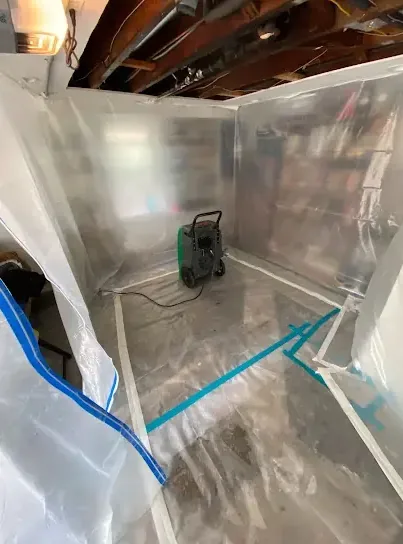
The water extraction crew starts with pumps and truck mounted equipment, because standing water keeps soaking carpet, drywall and wood.
Removing what flood water soaked
Carpet, pad, insulation and the lower part of drywall are cut out when flood water has soaked them. Hard surfaces are cleaned and treated.
Drying and records
Air movers and dehumidifiers run while the team takes moisture readings on each visit. Dated photos and readings give the owner a record of the work.
Garages, ground floors and lower levels
Where a home has a lower level or a garage, water tends to collect there first. The crew pumps it out, removes soaked materials and dries the structure in stages.
A ground floor with wet carpet and drywall follows the same order, with the lower walls opened as far as the readings require.
Using the borough flood maps and advice
Detailed flood maps at the borough Construction Office show the major flooding areas and repetitive loss areas. The office also offers one on one advice.
Other water problems in town, from burst pipes to sewage backups, follow the same logic. The full range of Palmyra water damage restoration services is listed for each of them.
Property owners can ask a few simple questions when they visit or call the office.
- Whether a property appears on the borough list of FEMA map amendments.
- Which flooding areas and repetitive loss areas the detailed maps show.
- What advice the office offers on protecting a structure from flood water.
Questions
Which Palmyra intersections does the borough call flood prone?
The Office of Emergency Management lists Temple Boulevard and Garfield Avenue, Fifth Street and Route 73, Leconey Circle at Firth Lane, and Spring Garden Street and Route 73.
Does street flooding mean water will get into a house?
Not always. The list covers roads, and the borough says flooding can happen anywhere. Cleanup starts when water crosses a threshold. A drying team can confirm how far water traveled with moisture readings.
Is flood water from the street safe to handle?
No. It is treated as contaminated, so people stay out of it and wet porous materials are usually removed.
What causes the flooding the borough describes?
The borough points to the design of its aging storm drain system and high tides, and a FEMA study says the Delaware River causes flooding in the borough.
Where can a property owner see detailed flood maps?
The borough Construction Office keeps detailed flood maps that show the major flooding areas and repetitive loss areas. The office also offers one on one advice.