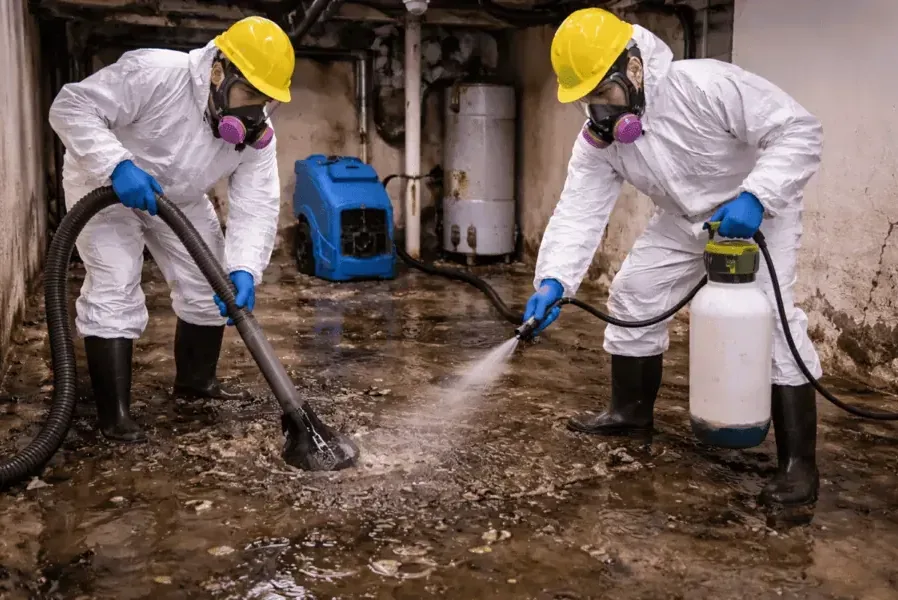
A sewage backup is the one water loss that is never just water. In Haddon Heights, the borough sewer plan describes a system first built in 1911, with mains that are generally clay pipe and an average age between 70 and 95 years. The plan describes the system and does not say how often backups happen, but it explains why age, rain and ownership all matter when one does.
Key takeaways
- The borough sanitary sewer system was first built in 1911 and expanded in 1923, 1929 and the 1950s.
- Borough sewer mains are generally vitrified clay pipe, and the sewer plan puts the average age of the system between 70 and 95 years.
- The plan lists added pumping at the Lake Street station to handle rain inflow and infiltration.
- The sewer lateral, the pipe that connects a property to the main, is owned by the property owner and not by the borough.
- Sewage is Category 3 water, so it is contained, removed and treated before any drying starts.
What the borough sewer plan says about age
The Borough Sewer Department operates the sanitary sewer system. Its plan gives a clear picture of how old the pipes and stations are.
A plan like this is written for the borough, so it describes mains and stations, not individual houses. A property's own situation depends on its lateral and its house drain.
Built in 1911 and expanded in stages
The system was first built in 1911 and expanded in 1923, 1929 and the 1950s. The plan puts the average age between 70 and 95 years, with some areas over 110 years old.
It rates about 52 percent of the system as roughly 95 years old, 45 percent as roughly 70 years old and 3 percent, the Glover Mill development, as new.
Clay pipe and brick manholes
Borough sewer mains are generally vitrified clay, also called terracotta, with some cast iron and ductile iron sections. The manholes are generally brick and mortar.
None of that says a backup is coming. It describes the kind of system a property is connected to.
Rain, inflow and infiltration
Inflow and infiltration means rain and groundwater that get into sewer pipes. More water in the pipes leaves less room for sewage, which is why utilities work to cut it down.
Under a January 22, 2013 agreement with the Camden County Municipal Utilities Authority, the borough agreed to run a program to remove inflow and infiltration.
The sewer plan also lists added pumping at the Lake Street station to handle rain inflow and infiltration and to ease surcharging of upstream sewers during significant rainfall. Surcharging means pipes filling past their normal level.
Three pump stations
The sewer system has three pump stations. Their ages differ a great deal.
- The Maple Avenue station is about 95 years old.
- The Cedar Avenue station is about 70 years old.
- The Lake Street Pump Station was rebuilt in 2015.
A retired station on Kings Highway
A borough pump station on Kings Highway was retired in 2015, when the borough connected directly to the Camden County Municipal Utilities Authority system.
What belongs to the borough and what belongs to the owner
Individual sewer laterals, the pipes from each property to the main, are owned and operated by the property owners they serve, not by the borough.
The borough Public Works website lists an after hours emergency, sewer and backups contact. That listing is the place to find the current number.
A Haddon Heights water damage restoration team deals with what reached the floor, whichever side of the property boundary the blockage turns out to be on.
- Report the backup to the borough through its after hours contact if the main may be involved.
- A plumber checks the lateral and the house drain.
- A restoration team handles the cleanup of everything the backup touched.
- Ask the plumber where the blockage is, in the lateral, the house drain or beyond, and write the answer down.
Why a backup is handled as Category 3 water
Sewage carries bacteria and other contaminants, so a backup is a health issue before it is a repair issue. A sewage backup cleanup follows a stricter process than a clean water leak.
Water from a floor drain can look cleaner than it is. Gray or clear water from a backup can still carry contamination, so every backup gets the same caution.
- People and pets stay out of the affected area until it is cleaned.
- Porous materials that soaked up sewage, such as carpet, pad and lower drywall, are removed rather than dried in place.
- Hard surfaces are cleaned and treated before drying starts.
- Containment keeps the problem from spreading to clean rooms.
First steps after a backup
The goal in the first few minutes is to keep the contamination from spreading.
- Stop using toilets, sinks, showers and washers, since each one adds water to the system.
- Keep everyone out of the wet area and keep the door closed if possible.
- Turn off power to the area if water is near outlets or appliances.
- Photograph the water and the drain it came from.
- Do not clean up sewage with a household vacuum or a mop.
- Call a plumber about the cause and a restoration team about the cleanup.
- Pour nothing down any drain until the cause is found.
What the cleanup removes and dries
A backup cleanup runs in a set order, and drying comes last.
Containment and removal
The crew seals off the area, pulls out standing sewage and removes porous materials that cannot be made safe.
Cleaning and treating
Surfaces that stay are cleaned and treated, and air scrubbers with HEPA filters can run while the work goes on.
Drying and verification
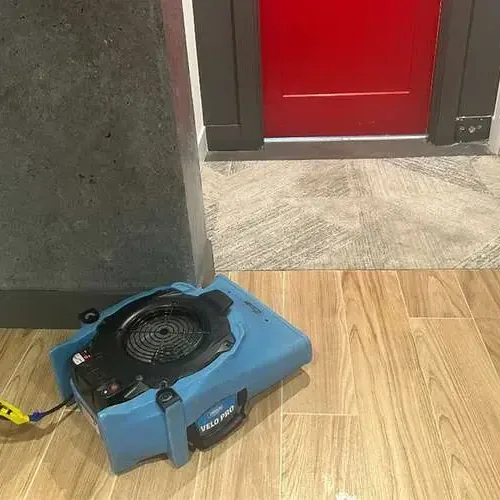
After cleaning, structural drying brings the walls and floor back to dry readings. The team takes readings on each visit and keeps equipment in place until the numbers match dry reference points.
Contents and personal items
Soft items that touched sewage, such as rugs, cardboard and upholstery, are usually discarded. Hard items can often be cleaned and treated.
A short list of what was wet, with photos, helps the owner decide what to keep and what to replace.
Records to keep after a backup
A backup involves several parties: the owner, a plumber, the borough and a restoration team. A shared record keeps the conversation clear.
- Photos of the backup, the drain and every wet surface, with dates.
- The time the backup was noticed and when water use stopped.
- The plumber's finding on where the blockage was.
- Notes on any contact with the borough about the main.
- Moisture readings and cleanup notes from the restoration team.
For a rented home
A tenant reports the backup to the landlord in writing, with photos. Who pays for what depends on the lease and the cause.
For a home sale or repair
Drying records and cleanup notes show what was done and when. They are useful if a buyer, a lender or a contractor asks.
Questions
How old is the Haddon Heights sewer system?
It was first built in 1911 and expanded in 1923, 1929 and the 1950s. The borough sewer plan puts the average age between 70 and 95 years.
Who owns the sewer pipe between a house and the main?
The property owner. Individual sewer laterals are owned and operated by the owners they serve, while the borough operates the sanitary sewer system.
What are inflow and infiltration?
Inflow and infiltration are rain and groundwater that get into sewer pipes. The borough agreed in January 2013 to run a program to remove them.
Why is a sewage backup treated differently from a clean water leak?
Sewage is Category 3 water. It is contained, removed and treated, and porous materials it soaked are removed before drying.
Where is the borough after hours contact for sewer problems?
The borough Public Works website lists an after hours emergency, sewer and backups contact. Look up the current number there.