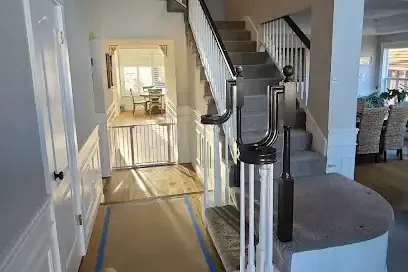
Townhome and condo communities took shape across Mount Laurel between 1965 and 1990, and many of them share walls, ceilings and floors. A leak in one unit rarely stays in that unit. Water follows framing, pipe chases and ceilings until it finds a place to show up.
Key takeaways
- A leak in a shared wall building can appear in a different unit than the one where it started.
- Washer hoses, water heaters in closets and aging supply and drain pipe are common sources in this kind of housing.
- Shut off the water at the fixture or the unit shutoff first, then tell the neighbor and the association or manager.
- Both sides of a shared wall are measured and dried, so one unit is not left wet while the other dries.
- Photos, dates and drying records help the owners and the association sort out who handles what.
How water crosses a shared wall
Water does not respect unit boundaries. It runs down the inside of a wall, spreads along a ceiling and drips from a light fixture two rooms away from the source.
That is why the wet spot and the leak are often far apart. The stain a neighbor sees may be the end of a path that began in another room or another unit.
A townhome and condo water damage job is usually a tracing job first, and a drying job second.
Townhome and condo layouts make this worse. Units stack and sit side by side, so a single failed hose can wet a floor, the ceiling below it and the wall beside it.
- A wall cavity can hide water for days before paint bubbles or drywall softens.
- Ceilings below a leak can hold water above the surface and then sag or drop.
- Pipe chases and shared floors let water travel from one unit to the next.
Where townhome and condo leaks usually start
The housing mix here comes from the growth of the late 1960s and after, when subdivisions, townhome communities, condo communities and office parks went up between 1965 and 1990. Aging supply and drain pipe, pipe more than 40 years old, is part of that picture.
Day to day, though, the culprits are ordinary household items.
Closets matter too. A water heater or washer tucked into a closet beside a shared wall sends water straight into framing that the two units have in common.
- Washer hoses that crack or pop off at the connection.
- Water heaters in closets, where a leaking tank sends water into walls and flooring.
- Dishwasher and refrigerator supply tubes that loosen over time.
- Toilet supply connections and tub or shower seals.
- Supply pipe and drain pipe inside walls that wear out with age.
The first steps after a leak starts
A fast, calm sequence limits the spread and protects the neighbors.
- Shut off the water at the fixture valve, or at the unit shutoff if the source is unclear.
- Turn off power to wet areas if water is near outlets or light fixtures.
- Move furniture, rugs and boxes away from the wet area.
- Photograph the source, the wet surfaces and any damage before cleanup.
- Tell the neighbors who share the wall, ceiling or floor.
- Call the association or property manager, then call a restoration team.
Telling the neighbor
A short, direct message works best. Say where the water is, what was shut off and that a drying team will need access to both sides of the wall.
Reading the community documents
The governing documents of each community set which pipes belong to the owner and which belong to the association. Reading them early avoids an argument later.
How the drying team handles two units
When water has crossed a shared wall, each unit needs its own readings, its own drying setup and its own records.
Because each side of the wall is measured separately, the records for the two units can differ. That is normal and useful, since it shows where the water traveled and where it stopped.
Tracing the source
The team uses moisture meters and a thermal camera to follow the water back to where it started. The source is stopped before drying begins.
Opening the wall and ceiling
Wet drywall and insulation are cut out where readings show water. Openings are kept as small as the readings allow, which keeps repairs simpler.
Drying both sides
Air movers and dehumidifiers work on the wall cavity from both units. Daily readings show when each side is dry, and the equipment stays until both are.
What the drying team needs from the association
Drying across a shared wall needs access, and access is easier when the association or manager is already on board.
- Entry to the neighboring unit, arranged with the neighbor or the manager.
- The location of the unit shutoff and any building shutoff.
- A contact who can approve work on a shared wall or a common pipe.
Ceiling and appliance leaks in the unit above
A ceiling stain below an upstairs bathroom or laundry room often points to an appliance leak or a fixture leak above it.
A ceiling leak cleanup in the lower unit usually needs a repair in the upper unit too, or the stain returns.
- Water on a ceiling can mean a supply leak, a drain leak or a fixture overflow upstairs.
- The lower unit dries the ceiling and wall, and the upper unit dries the floor and subfloor.
- Repairs wait until both units read dry.
Common mistakes after a shared wall leak
A few habits turn a small loss into a larger one.
- Painting over a stain before the source is found and the wall is dry.
- Waiting to see if it dries on its own, which gives moisture time to spread.
- Closing up a wall after the visible water is gone, with the cavity still wet.
- Running a single fan and calling the job done.
- Skipping the neighbor, which leaves the other side of the wall wet.
Keeping a record for the association and the owners
A shared wall leak can involve three parties: the owner where the water started, the owner where it showed up and the association. A clear record keeps all three working from the same facts.
The record starts on day one and grows with every visit.
- Dated photos of the source, each wet surface and any damaged belongings.
- The time the leak was found and the time the water was shut off.
- Names and contact details for each affected neighbor.
- Copies of every message sent to the association or the manager.
- Moisture readings and notes from each drying visit.
- Receipts for emergency repairs and any replaced parts.
For the owner where the leak started
This owner usually repairs the source and keeps the parts or fittings that failed. A photo of a cracked hose or a loose fitting is useful evidence later.
For the owner where the water showed up
This owner documents the stain, the wet wall and the damaged finishes before cleanup. The drying team adds readings that show how far the water traveled.
Questions
Who pays when a leak crosses from one unit to another?
That depends on the community documents and where the leak started. Photos, dates and drying records from both units make that conversation easier. A written timeline with photos is the strongest starting point.
Does the neighbor need to be told right away?
Yes. A shared wall or ceiling may be wet on the other side, and the drying team needs access to measure it.
Can a leak start in a closet water heater and reach other rooms?
Yes. A tank in a closet can send water into the wall and the flooring around it, and from there to nearby rooms or the unit next door.
Why does the drying team open walls that look fine?
Water can sit inside a cavity while the surface looks normal. Readings decide where a wall is opened and where it stays closed.
How can an owner tell the leak is fully dry?
The drying team compares daily readings to dry reference points and removes equipment only after the walls and ceilings match them.