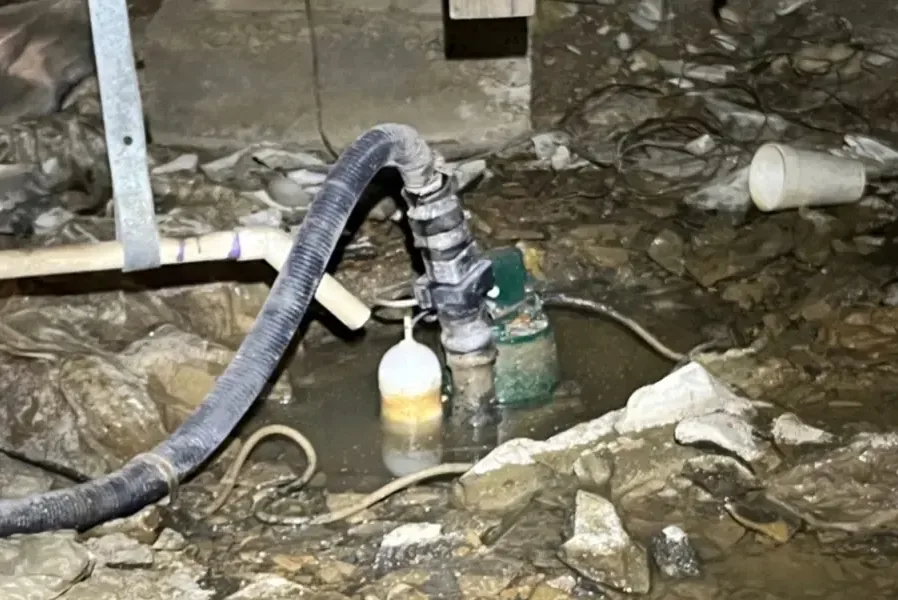
A sump pump only works while it has power, and the storms that bring heavy rain often take the power out too. The 2019 Burlington County Hazard Mitigation Plan names Ramblewood and the Country Side section of Mount Laurel for battery backup sump pumps. Here is what that means when a pit overflows, and how the cleanup works afterward.
Key takeaways
- A sump pump on house power stops when the power fails, so a storm outage and an overflowing pit often arrive together.
- The 2019 Burlington County Hazard Mitigation Plan names Ramblewood and the Country Side section for battery backup sump pumps.
- Ramblewood has an underdrain system that runs on pumps, which makes pump condition and power a fair question for owners there.
- Stay out of standing water until power to the area is off, then document the damage before moving anything.
- Extraction comes first, then wet finishes are cut back and the floor and walls are dried to moisture readings.
Why a sump pump stops when the power does
A sump pump sits in a pit and pushes water away from the house when the level rises. It runs on electricity, so an outage turns the pump into a silent machine beside a filling pit.
The timing is what hurts. Heavy rain and power loss tend to arrive together.
Winter Storm Quinn on March 7, 2018 brought outages and downed trees, and nor'easters and summer thunderstorms are part of the normal weather pattern here.
A sump pump failure cleanup call often starts with exactly this story: a storm, an outage and a pit that rose with nothing to empty it.
- A pump with no power cannot move any water, even when the motor is fine.
- A float that sticks, a worn motor or a clogged intake can stop a pump while the power is on.
- A check valve that sticks can let pumped water drain back into the pit.
- A pump that runs but cannot keep up still lets the pit overflow when water arrives faster than it leaves.
What the county hazard plan says about Ramblewood and Country Side
A county hazard plan speaks about areas, not individual houses. Each owner still has to check the pit, the pump and the power supply at home.
Ramblewood and its pumped underdrain system
Ramblewood has an underdrain system that runs on pumps. The 2019 Burlington County Hazard Mitigation Plan, in its section on the township, names Ramblewood for battery backup sump pumps.
That pairing is worth noticing. Where drainage depends on pumps, the question of what powers them matters before the storm, not during it.
The Country Side section
The same passage of the plan names the Country Side section. Owners there who depend on a sump pump can treat that as a prompt to ask whether the pump has a power plan.
A battery backup is one answer, and a plumber can explain the options and how long a battery is rated to run.
What an overflowing pit leaves behind
When a pit overflows, the water goes wherever the floor lets it. It spreads out, soaks the base of the walls and wicks into anything that touches it.
Water that comes up from a pit is not clean. It carries soil and whatever sits on the floor, so porous materials that soak it up are usually removed instead of saved.
Mold can start on wet materials in 24 to 48 hours, which is why the first day matters so much.
- Carpet and pad that soaked up the water.
- Drywall at the bottom of walls, which pulls water upward.
- Stored boxes, furniture legs and anything left on the floor.
- Insulation and wood framing at the base of finished walls.
Unfinished lower levels
A bare floor with block or concrete walls is the easier case. The water is pumped out, hard surfaces are cleaned and the structure dries with air movers and dehumidifiers.
Finished lower levels
Once water reaches carpet, paneling or drywall, the job grows into a full basement flooding cleanup. Wet finishes are cut back and the framing behind them is dried before anything is rebuilt.
First steps when the pit overflows
Safety comes before the water. Standing water and electricity do not mix, and a flooded outlet or cord is a shock risk.
Once the area is safe, a few quick moves limit what the water can reach.
- Stay out of standing water until power to that area is off, switched at the panel from dry ground.
- If an outage caused the problem, leave switches alone until service is back and the area has been checked.
- Move rugs, boxes and small furniture up and out of the wet zone.
- Photograph the pit, the water level and every wet surface before anything is moved.
- Skip the household vacuum on standing water.
- Call a restoration team once the water is safe to approach.
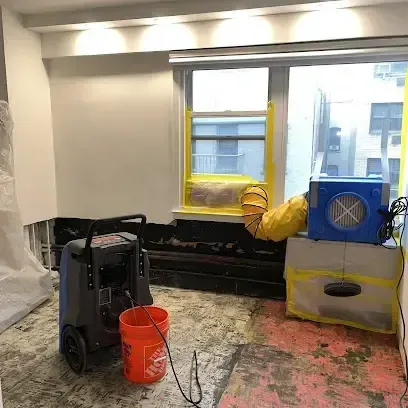
How extraction and drying work through a wet lower level
The extraction crew starts with the standing water, using pumps or truck mounted equipment when the water is deep. Water extraction matters because any water left in place keeps soaking the walls and floor.
After that, the team sorts wet materials into what can be dried and what has to go.
Water out first
Bringing the level down stops the soaking and lets moisture readings show how far the water traveled.
Cut back what cannot be saved
Soaked pad, insulation and the lower part of drywall are cut out. Concrete and block stay in place and are cleaned and dried.
Dry to the readings
Air movers and dehumidifiers go in, and the drying team takes moisture readings on each visit. Equipment stays until the walls and floor read dry, not until they feel dry.
Backup power questions to settle before the next outage
None of this replaces a plumber's advice, but it turns a surprise into a checklist.
In a cold snap, the outdoor end of a discharge pipe can also freeze shut, so the pipe needs a look before winter.
- Ask whether the pump has a battery backup and how long the battery is rated to run.
- Test the float by pouring water into the pit and watching the pump start.
- Check that the discharge pipe is clear and carries water away from the house.
- Keep the area around the pit clear so the pump and cord can be seen.
- Note the age of the pump, since an old motor can quit even when power is on.
Questions
Does a sump pump work during a power outage?
Not unless it has a battery backup or another power source. A pump on house power stops when the outage starts, and the pit keeps filling.
Why do Ramblewood and Country Side come up for battery backups?
The 2019 Burlington County Hazard Mitigation Plan names both for battery backup sump pumps, and the Ramblewood underdrain system runs on pumps.
Is it safe to walk into a lower level with standing water?
Only after power to the area is off. Water can reach outlets, cords and appliances, and that is a shock risk.
How long does a wet lower level take to dry?
It depends on how wet the materials got and what they are made of. The drying team reads moisture levels each visit and removes equipment when the readings are dry.
Is water from a sump pit clean water?
No. It carries soil and floor debris, so porous materials it soaked are usually removed, while hard surfaces are cleaned and dried.