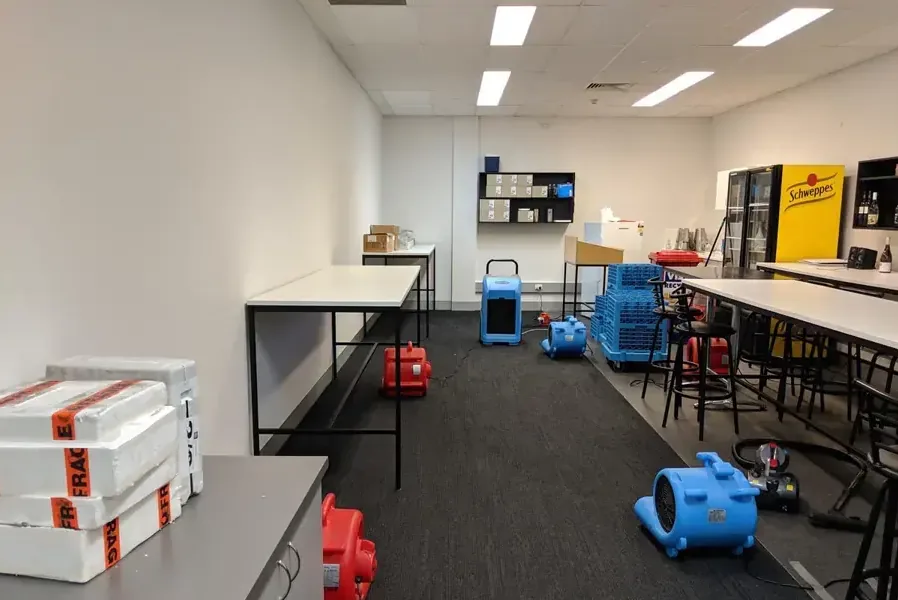
A business water loss is a clock problem. Wet carpet tile, soaked ceiling tile and a stalled workday all cost more the longer they sit. Mount Laurel has office parks built between 1965 and 1990 and corridors along Route 73 and Route 38, and a loss in any of them follows the same first day.
Key takeaways
- Day one decides how much of a suite is saved, and safety, shutoff, photos and extraction come first.
- Office and retail spaces share the same first steps whether the water came from a roof, a pipe or a storm.
- Tenants, landlords and property managers control different shutoffs and systems, so an early call to the manager saves time.
- Phased drying lets part of a space stay open while another part dries.
- Dated photos and drying records help every party involved.
What day one means for a business water loss
The first day of a commercial loss is about three things: stopping the water, protecting people and property, and getting extraction started. Everything else depends on those.
A commercial water damage job also has more moving parts than a home does. Several tenants, a landlord and shared building systems can all be involved at once.
- Stop the source and shut off the water at the nearest valve.
- Make the space safe for staff and customers.
- Protect equipment, records and stock from further water.
- Start extraction so the water stops spreading into carpet, ceilings and walls.
Where commercial water losses start
Commercial water losses come from many places, and the source often decides who has to be called first.
Older and newer buildings share these risks. A roof, a supply pipe or a fixture can fail in any of them, and a storm can overwhelm a door or a drain in the same way.
- A roof leak above a suite, which can soak ceiling tile and drop water onto desks and floors.
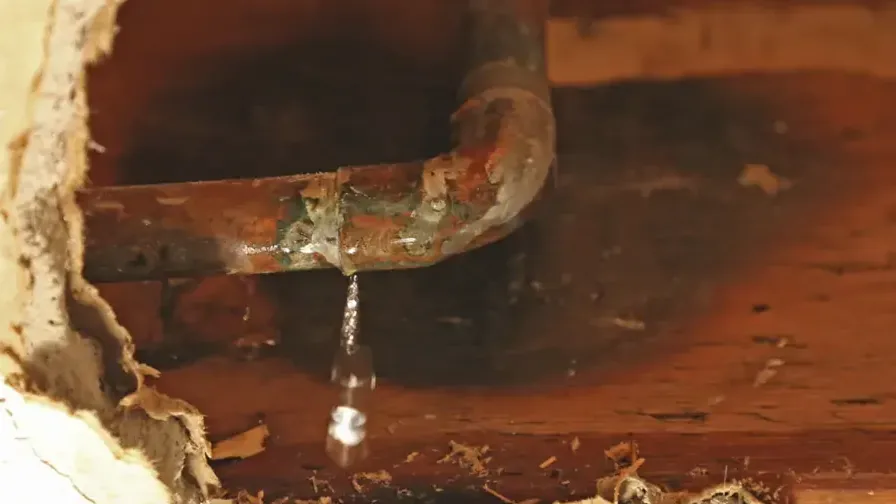
- A supply pipe that fails above a ceiling or inside a wall.
- Restroom and break room fixtures, including toilets, sinks and water heaters.
- Condensate from heating and cooling equipment that backs up or overflows.
- Storm water at entries, loading areas and ground floor doors.
Storm water
Heavy rain can send water through doors and low entries. A storm and creek flood cleanup follows a different process from a clean water leak, because storm water is treated as contaminated.
The first steps: safety, shutoff and records
A calm sequence in the first minutes protects people and keeps the loss from growing.
- Move people away from wet floors and from any sagging ceiling.
- Shut off the water at the nearest valve or the main.
- Turn off power to wet areas if water is near outlets, light fixtures or equipment.
- Photograph the source, the wet surfaces and any damaged stock or equipment.
- Move computers, files and stock off wet floors and away from ceiling leaks.
- Call the property manager or landlord, then a restoration team.
Landlords, tenants and property managers
In a shared building, one leak can touch several parties at once, and each one controls something different.
A short written plan for who calls whom, and who may approve work, saves time on a loss that does not wait for office hours.
Who controls the shutoffs
The property manager or landlord usually controls the main water shutoff, the roof and the building systems. A tenant controls the suite itself and its contents.
Who authorizes the work
Leases set who approves emergency drying and who pays for repairs. A short written note to the landlord with photos and a time makes the record clear.
- Send the property manager photos and the time the loss was found.
- Ask who will authorize the drying work.
- Keep every message in one folder.
Contents, stock and records
Stock, equipment and paper files belong to the tenant, and a loss often puts them at risk before the walls are touched.
- List what was wet, with photos.
- Move undamaged stock and equipment to a dry area.
- Keep wet items until they have been photographed and counted.
How drying works in an office or storefront
Offices and shops have materials that homes rarely have in the same amounts, such as carpet tile, suspended ceilings and long runs of drywall partitions.
The first readings set a baseline. Each visit compares new readings to dry reference points, so the manager sees progress in numbers instead of guesses.
Extraction and ceilings
The crew starts with water extraction on floors and removes wet ceiling tile that is sagging or stained. Insulation above the ceiling is checked and pulled if it is wet.
Carpet tile, flooring and walls
Carpet tile is lifted so the floor below can dry, and wet drywall is cut out where readings show water. Hard floors are dried in place when readings allow.
Phased drying
Large spaces dry in phases, so one area is sealed and dried while another stays in use. Structural drying is planned with the manager so work fits around the business day.
Ceiling tile and insulation
Ceiling tile that has been wet usually has to go, since it stains, sags and can drop. Insulation above it holds water and is removed if it stays wet.
Keeping a business running during the work
A water loss does not have to stop a business, but it needs a plan.
- Decide which rooms must stay open and which can be sealed.
- Move computers, servers and files out of the wet zone before the drying equipment goes in.
- Tell staff and customers about blocked doors, wet floors and noise.
- Ask the drying team for a daily update on readings and next steps.
- Keep a running list of damaged stock, equipment and finishes.
Getting a business ready before a loss
A little preparation shortens the first day of any loss.
- Mark the main water shutoff and any area shutoffs, and make sure staff know where they are.
- Keep a list of the landlord, the property manager, a plumber and a restoration team.
- Photograph the space, the stock and the equipment while everything is dry.
- Keep computers, servers and files off the floor and away from ceiling pipes.
- Keep a backup of important data in another location so a wet server is a repair, not a loss.
For tenants
Read the lease for who controls the shutoffs and who approves emergency work. Keep a copy where staff can find it.
For owners and managers
Walk the building on a regular schedule and check ceilings, roof drains and mechanical rooms for early signs of water.
Questions
What is the first thing to do after a commercial water loss?
Make the space safe, stop the source and shut off the water, then photograph the damage and start extraction.
Who is called first, the landlord or the restoration team?
Both are needed, and the order depends on who controls the shutoff. A quick call to the property manager and a call to a restoration team can happen together.
Can a business stay open during drying?
Often partly. Phased drying seals off the wet area while the rest of the space stays in use, as long as it is safe.
Why is carpet tile lifted?
Water spreads under tile onto the floor below, so the tile is lifted to let the floor dry and to check readings.
What records should be kept?
Dated photos, the time the loss was found, messages with the landlord and the daily drying readings give every party the same record.